

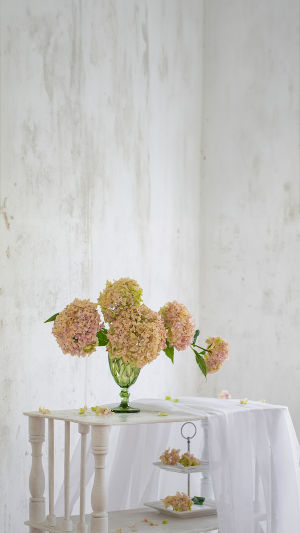
A quiet corner of your home can transform with just a few thoughtfully placed blooms. It's not about filling every inch of space; it's about creating a sense of fullness with intention.
Minimalist flower arrangements focus on quality, shape, and flow rather than quantity, proving that less can indeed be more.
<h3>Choose the Right Flowers</h3>
The first step in a minimalist arrangement is picking blooms that make a statement on their own. Look for flowers with distinct shapes, colors, or textures.
<b>1. Focus on a single flower type</b> – Using one type, like a single stem of dahlia or sunflower, allows it to be the star.
<b>2. Combine shapes thoughtfully</b> – Pair round flowers with spiky or linear foliage to create visual balance. For example, a single ranunculus with tall, thin eucalyptus stems adds height and movement.
<b>3. Limit your color palette</b> – Stick to two or three colors. A white dahlia with soft green leaves instantly feels elegant and full without overcrowding the vase.
<h3>Use Space Strategically</h3>
In minimalist design, empty space isn't wasted—it's part of the arrangement. Giving flowers room to breathe emphasizes their beauty.
<b>1. Embrace asymmetry</b> – Place flowers at varying heights and angles. A central bloom slightly off-center with a few smaller buds leaning outward creates a natural, flowing feel.
<b>2. Keep stems visible</b> – Choosing a clear vase and allowing stems to show adds depth. You'll notice the interplay of lines and shapes, making the arrangement feel richer.
<b>3. Don't overcrowd</b> – Resist the urge to fill every inch. Three to five stems can look fuller than a dozen if placed with intention.
<h3>Focus on Foliage and Texture</h3>
Leaves, grasses, and textured elements can make a minimalist arrangement feel substantial without adding more flowers.
<b>1. Mix textures</b> – Combine smooth petals with rougher leaves or fuzzy buds. For instance, pairing a soft hydrangea with spiky thistle creates a satisfying contrast.
<b>2. Layer foliage</b> – Add greenery at different heights to frame the flowers. Low leaves around the base can support a central bloom and make it feel grounded.
<b>3. Use repetition sparingly</b> – Repeating shapes or leaves a few times creates cohesion. A single type of greenery repeated twice or thrice can unify the arrangement without clutter.
<h3>Choose the Right Container</h3>
Your vase or container can enhance the minimalist effect by complementing the flowers without stealing attention.
<b>1. Pick simple shapes</b> – Cylindrical or square vases often work best. Avoid ornate designs that compete with your blooms.
<b>2. Match size to arrangement</b> – A small bloom in a giant vase can feel lost. A medium vase that snugly holds the stems gives a sense of fullness.
<b>3. Consider materials</b> – Glass, ceramic, or even metal can work. Clear glass shows the stems and water, adding depth, while ceramic gives a grounded, earthy feel.
<h3>Maintain Your Arrangement</h3>
Even minimal arrangements need care to retain their impact. Simple upkeep keeps them looking fresh and lively.
<b>1. Trim stems regularly</b> – Cut about half an inch every few days to prevent water blockage and prolong freshness.
<b>2. Remove wilted elements</b> – Taking out fading blooms or leaves keeps the arrangement crisp. Even one drooping stem can affect the overall look.
<b>3. Refresh water</b> – Clean, fresh water makes flowers last longer and maintains clarity in clear vases, enhancing the minimalist aesthetic.
Creating a minimalist flower arrangement is an exercise in restraint and focus. By selecting impactful blooms, using space intentionally, layering textures, and choosing the right container, you can craft arrangements that feel rich and full without crowding your space. Minimalism isn't about emptiness—it's about making every element count. Next time you approach your vase, think small, choose with care, and watch simplicity bloom into elegance.


