

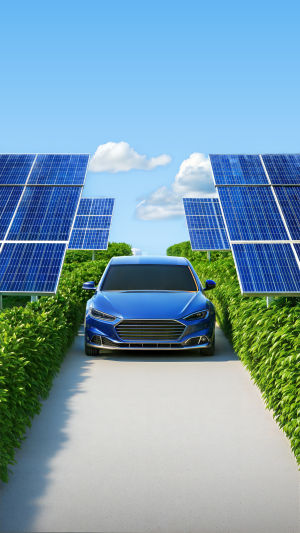
Walking past a city street lined with charging stations, it's hard not to notice how electric vehicles (EVs) are becoming part of daily life.
Their quiet hum, sleek designs, and growing presence hint at a shift that's more than just a trend—it's a transformation in how we think about driving, energy, and the environment.
Understanding where EVs are headed can help drivers, commuters, and car enthusiasts make smarter choices today while preparing for tomorrow.
<h3>Advancements in Battery Technology</h3>
At the heart of any electric car is its battery, and improvements here are driving the EV revolution.
<b>Energy density improvements</b>: Modern lithium-ion and emerging solid-state batteries store more energy in the same space, giving cars longer ranges. For example, some newer EVs now offer over 400 miles per full charge, reducing “range anxiety.”
<b>Charging speed</b>: Fast-charging stations can deliver 80% of battery capacity in under 30 minutes. This makes long-distance travel more practical.
<b>Longevity and durability</b>: Battery packs today often last over 200,000 miles with minimal capacity loss, meaning drivers can rely on their EVs for longer without expensive replacements.
Actionable tip: If you're considering an EV, look for models with at least 300 miles of range and support for 150 kW fast charging. This ensures flexibility for both daily commutes and weekend road trips.
<h3>Smart Infrastructure and Charging Networks</h3>
EV adoption depends heavily on accessible and reliable charging infrastructure.
<b>Urban charging stations</b>: Cities are increasingly adding curbside chargers and public stations at shopping centers, parking garages, and workplaces.
<b>Highway fast-charging corridors</b>: Routes between major cities now feature high-speed chargers every 50–100 miles, allowing for longer trips without extended delays.
<b>Home charging solutions</b>: Installing a Level 2 home charger can fully charge a vehicle overnight, making daily commutes hassle-free.
Example in practice: A family living in a suburban area installed a 240V home charger and found that even with heavy commuting, they only needed public stations once or twice a month, saving both time and money.
Actionable tip: Before buying an EV, map out local charging options and consider a home installation to ensure daily convenience.
<h3>Autonomous and Connected Features</h3>
EVs are not just about zero emissions—they are increasingly smart vehicles.
<b>Driver-assistance systems</b>: Lane keeping, adaptive cruise control, and automatic emergency braking make driving safer, especially on long trips.
<b>Connectivity</b>: Many EVs offer real-time route optimization based on battery level, traffic, and charging station availability.
<b>Autonomous driving potential</b>: Full self-driving remains in development, but even partial automation helps reduce fatigue and improves safety in traffic-heavy environments.
Example in practice: A commuter uses a connected EV to plan routes, automatically avoiding congested areas and integrating charging stops into the journey. The result is smoother daily trips and fewer unexpected delays.
Actionable tip: When comparing EVs, check the level of driver-assistance features and software update policies—some manufacturers continually improve performance remotely.
<h3>Environmental and Economic Impact</h3>
Switching to electric vehicles has clear environmental benefits, and the cost of ownership is becoming more competitive.
<b>Reduced emissions</b>: EVs produce no tailpipe emissions, which improves air quality in urban areas. Coupled with renewable energy, they can drastically cut carbon footprints.
<b>Lower running costs</b>: Electricity is cheaper than gasoline per mile, and EVs require less maintenance because they have fewer moving parts.
<b>Incentives</b>: Many regions offer tax credits, rebates, or reduced tolls for EV owners, further lowering ownership costs.
Example in practice: A small business replaced its delivery vans with electric models. Over a year, fuel savings plus incentives reduced operational costs by 25%, while carbon emissions were cut significantly.
Actionable tip: Calculate total cost of ownership over 5–10 years, including fuel, maintenance, and incentives. Often, EVs are more economical than traditional cars in the long run.
<h3>Design, Performance, and Lifestyle Integration</h3>
Modern EVs offer performance and versatility that appeal to a broad range of drivers.
<b>Instant torque and smooth acceleration</b>: Electric motors provide fast, responsive acceleration, making city driving and merging on highways effortless.
<b>Quiet, refined ride</b>: Minimal engine noise enhances comfort and reduces stress during commutes.
<b>Interior space optimization</b>: Without a conventional engine, EVs can offer more cabin space and flexible storage solutions, perfect for families and adventurers alike.
Example in practice: A couple chose a compact electric SUV for weekend trips. The extra cabin space and silent ride made long drives more relaxing, and the instant acceleration helped in tight mountain passes.
Actionable tip: Test drive multiple EV types to see how their ride, acceleration, and cargo space fit your daily routine and lifestyle needs.
Electric vehicles are more than a replacement for gasoline cars—they represent a shift in mobility, energy use, and urban life. By understanding battery technology, charging infrastructure, smart features, environmental benefits, and lifestyle advantages, drivers can embrace the transition confidently.
Choosing the right EV today can make your daily commute smoother, your long trips easier, and your environmental footprint smaller—all while enjoying a glimpse into the future of transportation.


