

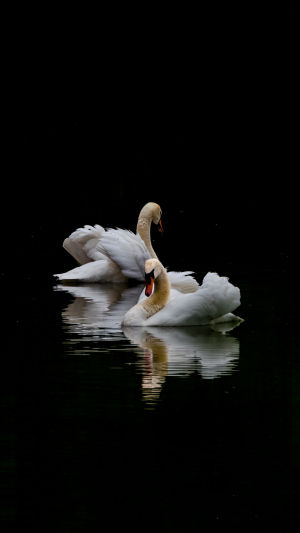
White swans live gracefully on lakes, ponds, and wetlands. With their long necks and pure white feathers, they move across the water in a calm and balanced way. Watching them swim often brings a sense of peace and connection with nature.
These birds play important roles in wetland ecosystems. They feed mainly on aquatic vegetation and sometimes small invertebrates, and their feeding behavior can influence wetland plant communities. Protecting swans also means protecting clean water, healthy habitats, and rich biodiversity for the future.
<h3>Physical Features And Appearance</h3>
White swans have a strong, large body. Their length usually ranges from about 120–160 cm (depending on species). Their weight can reach roughly 6.5–12 kg in large species, though it varies by species and individual bird. Compared with many other water birds, they look powerful and steady.
Their feathers are usually white when fully grown, which makes them easy to recognize. Bill color varies by species: for example, mute swans typically have an orange bill with black at the base, while whooper and Bewick’s swans show more yellow-and-black patterns. Leg and foot color can also vary, but darker feet are common in many species.
They have a long neck that helps them search for food underwater and maintain balance while swimming. Their legs are short but strong, and their toes are connected by webbing. The webbed feet allow smooth movement across water.
<h3>Habitat And Living Environment</h3>
White swans mainly live in the Northern Hemisphere (depending on species). They prefer lakes, reservoirs, ponds, rivers, and wetlands with rich vegetation. These areas provide food and safe nesting spaces. Clean water and stable surroundings are key for their survival.
We often find them staying in quiet water areas where plants grow thick. They avoid noisy or heavily disturbed places. When humans protect wetlands and reduce pollution, swans return and continue living in their natural homes.
Some white swans migrate during seasonal changes, while others may be resident or only partly migratory depending on the species and region. In cold weather, migratory populations fly to warmer regions to find food and avoid harsh conditions.
<h3>Food And Feeding Habits</h3>
White swans are primarily herbivorous, and their main food includes aquatic plants such as roots, stems, leaves, and seeds. They may also eat small invertebrates like insects, mollusks, and worms while feeding in water.
We can observe them lowering their long necks into the water to search for food. Sometimes they turn their heads upside down to reach plants below the surface. This feeding method is efficient and flexible.
Food quality directly affects their growth and health. Rich vegetation and clean water provide enough energy for them to grow strong and reproduce successfully. A healthy environment supports stable swan populations.
<h3>Behavior And Social Life</h3>
White swans usually live in small groups or family units. They communicate through body movements and sounds. Group living helps them protect each other from danger.
They are generally calm but become alert when they sense threats. If danger appears, they quickly warn other members and may fly away together. Their flight is powerful and steady, with wide wings beating slowly through the air.
During the breeding season, pairs form strong bonds. In many swan species, both parents help protect the nest and care for the young, which improves survival of the next generation.
<h3>Breeding And Growth</h3>
White swans build nests near water. They use reeds, grass, and plant materials to create a stable nest. The female lays several eggs and stays close to guard them, while the male often remains nearby to defend the nesting area.
After the eggs hatch, the young swans (cygnets) stay with their parents. The parents guide them to food sources and protect them as they grow. The young birds begin life in soft gray or brownish down and gradually develop paler plumage; full white plumage may take time to develop, depending on the species.
Stable habitats and low disturbance are important during breeding. When people respect their nesting areas, swans can raise their young successfully.
<h3>Protecting White Swans</h3>
White swans receive legal protection in many countries, but conservation status varies by species and region. Habitat loss, pollution, and human disturbance are major challenges for many swan populations. In some places, however, certain swan populations (such as introduced mute swans) may be managed because they can affect native ecosystems.
We can help by protecting wetlands, reducing water pollution, and respecting wildlife areas. Simple actions like avoiding noise near nesting sites and supporting conservation efforts make a difference.
Lykkers, white swans remind us of nature’s beauty and balance. When we protect their home, we protect biodiversity and the environment for future generations. Let us value these elegant birds and ensure they continue living freely on clean and peaceful waters.
Swan Life - A Peek Into The Life of Mute Swans
WADT - Why Animals Do Things


