

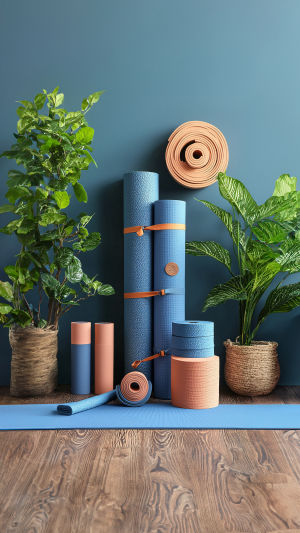
You might notice it on a quiet morning: a mat unrolled in the living room, a few props neatly arranged, and someone moving deliberately through slow, controlled motions.
Practicing Pilates at home offers the chance to strengthen your body, improve posture, and cultivate mental focus—all without the constraints of a studio schedule.
With a little guidance, space, and consistency, a home practice can be both effective and enjoyable.
<h3>Setting Up Your Home Space</h3>
<b>Choosing the right area</b>
Pick a space with enough room to stretch fully in all directions. A quiet corner or living room works well, as long as there are minimal distractions. Ensure the floor is even and use a non-slip mat for safety and comfort. Having a designated area signals to your mind and body that it's time for focused practice.
<b>Gathering essential props</b>
While Pilates can be done with just your body weight, simple props can enhance your practice. A mat, small resistance bands, a Pilates ring, or lightweight balls can be used to challenge muscles and support alignment. Even household items like cushions or towels can substitute for studio equipment when needed.
<b>Creating the right atmosphere</b>
Lighting, music, and ventilation affect your focus and motivation. Soft natural light and a tidy environment help you feel calm, while gentle background music can encourage rhythm and flow. Proper air circulation ensures comfort during exercises and promotes longer practice sessions.
<h3>Core Principles of Home Pilates</h3>
<b>Focus and control</b>
Pilates emphasizes mindful movement. Pay attention to body alignment, breathing, and muscle engagement. Each motion should be deliberate, avoiding rapid or uncontrolled movements. Focusing on precision rather than speed enhances effectiveness and reduces the risk of injury.
Brooke Siler, Pilates specialist and author, states, “In Pilates, physical energy is exerted from engaging your center to coordinate the movements of your limbs. In this way, a strong foundation (what we term 'the Powerhouse') is built upon which we can rely for strength and support during the tasks of daily living.”
<b>Breath and rhythm</b>
Breathing correctly is central to Pilates. Inhale to prepare, exhale to execute movements, and coordinate breath with motion. Conscious breathing improves oxygen flow, stabilizes the core, and helps maintain fluidity in exercises, making each session more efficient.
<b>Consistency over intensity</b>
Short, regular sessions often yield better results than occasional long workouts. Even 20–30 minutes daily can strengthen the core, improve posture, and increase flexibility over time. Gradually increase intensity or incorporate new exercises to continue progress.
<h3>Sample Exercises for Home Practice</h3>
<b>The Hundred</b>
Lie on your back with legs lifted and arms extended. Pump your arms up and down while engaging your core and breathing rhythmically. This exercise warms up muscles, increases circulation, and strengthens the abdominal region.
<b>Roll-Up</b>
Start lying flat with arms overhead. Slowly roll your spine up to a seated position, reaching toward your toes, then roll back down. This improves spinal mobility and stretches the back and hamstrings while strengthening the abdominals.
<b>Leg Circles</b>
Lie on your back with one leg extended toward the ceiling. Circle the leg slowly clockwise and counterclockwise, keeping the hips stable. This movement enhances hip mobility, core stability, and leg strength simultaneously.
<h3>Maintaining Motivation and Progress</h3>
<b>Track progress</b>
Keeping a journal or marking milestones helps maintain focus and motivation. Note improvements in flexibility, strength, or endurance over weeks to celebrate achievements.
<b>Mix routines</b>
Rotate exercises to target different muscle groups and avoid monotony. Combining mat work, resistance exercises, and stretching keeps practice engaging and comprehensive.
<b>Listen to your body</b>
Respect your limits, especially when starting. Pain or discomfort signals the need to adjust posture or intensity. Mindful attention prevents injury and reinforces the connection between mind and body, which is central to Pilates philosophy.
Practicing Pilates at home offers flexibility, accessibility, and a personal space for mindful movement. By dedicating a small corner, focusing on technique, and following a consistent routine, you can enjoy the physical and mental benefits of Pilates without leaving your house. Over time, this practice fosters strength, balance, and a calm, centered mindset, proving that even a few minutes a day can make a meaningful difference in overall well-being.


