

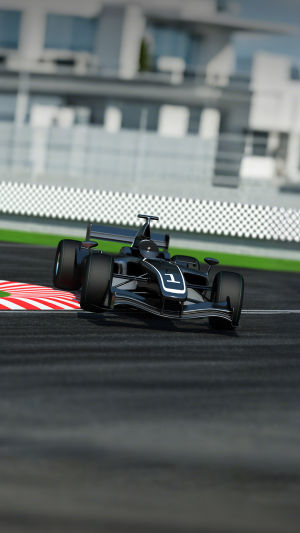
When it comes to racing, the thrill of speed is undeniable.
however, if you're not careful, pushing a vehicle to its limits can quickly turn dangerous. In motorsports, achieving the perfect balance between power and safety is critical—not just for performance, but for survival.
It's easy to be drawn to the allure of high horsepower and blistering speeds, but every racer knows that the faster you go, the more important safety becomes. So how do you balance the two? It's all about strategic decisions that incorporate both advanced engineering and smart personal choices.
<h3>Understanding the Importance of Power</h3>
Power, or horsepower, is at the heart of what drives a vehicle in motorsport. It gives you the ability to accelerate faster, handle more challenging terrain, and achieve higher top speeds. However, too much power can easily become a liability, especially if a driver isn't equipped to handle it.
<b>Example:</b>
In Formula 1, teams spend millions of dollars to develop cars with extreme power, but they also invest heavily in driver training and car handling systems to ensure that those powerful engines don't lead to catastrophic accidents. A driver might have access to 1,000 horsepower, but without the skill to manage it, that power is useless—or even dangerous.
<h3>Safety Features: The Counterweight to Power</h3>
On the flip side, a powerful machine needs safety features designed to protect the driver in case things go wrong. High-speed racing accidents often involve sudden impacts, extreme forces, and high-risk scenarios, which is why safety must never be an afterthought.
<b>Example:</b>
In NASCAR, the "HANS device" (Head and Neck Support) is a mandatory piece of safety equipment that significantly reduces the risk of neck and spine injuries during high-speed collisions. Similarly, most modern race cars include reinforced roll cages, five-point harnesses, and fire-resistant suits to ensure that the driver is protected no matter what happens on the track.
These features aren't there to limit a driver's performance—they're there to ensure the driver can continue competing after a crash.
<h3>Optimizing Aerodynamics for Both Power and Safety</h3>
Aerodynamics plays a crucial role in balancing power and safety. The better a car or bike can cut through the air, the less drag it faces, and the more efficiently the engine works. However, aerodynamic modifications can also affect how stable a vehicle is at high speeds, and safety must always come first.
<b>Example:</b>
Consider the rear wing of a racing car: it's not just for looks. The wing is designed to create downforce, which increases traction and reduces the risk of the car losing control at high speeds. While it may add some weight, the stability it provides is far more important than shaving off a few grams.
Similarly, motorcycle racers rely on aerodynamic bodywork to improve high-speed stability, but it's carefully engineered to ensure the rider stays secure and protected even if the bike slides out of control.
<h3>Weight Distribution and Its Effect on Performance</h3>
The way a vehicle's weight is distributed affects how it handles and performs during a race. Too much weight at the wrong places can make a car or bike harder to control, especially in sharp turns or during high-speed maneuvers. The goal is to find a weight distribution that maximizes both power and safety.
<b>Example:</b>
In MotoGP, the center of gravity plays a huge role in a bike's handling. Engineers tweak the frame and suspension to ensure the bike stays stable during high-speed cornering.
Riders like Valentino Rossi have been known to adjust their riding posture based on how the bike is balanced, optimizing their control during tight corners. Similarly, race car engineers spend countless hours perfecting the balance of weight distribution in the car's chassis to ensure handling is both sharp and responsive, without compromising safety features like roll bars or safety cells.
<h3>Driver Training: Handling Power Safely</h3>
No matter how much power a car or bike has, the driver's ability to manage it safely is perhaps the most important factor. Racing schools and professional drivers undergo years of training to master techniques that allow them to harness their vehicle's power while staying in control.
<b>Example:</b>
Drivers in NASCAR and Formula 1 are not only taught how to drive fast, but also how to safely navigate tight situations. For example, Formula 1 drivers practice “threshold braking,” where they learn to brake at the precise moment to avoid skidding while still maintaining speed. Similarly, motorcycle racers are trained in throttle control, learning to gradually accelerate and decelerate, which reduces the likelihood of losing traction at high speeds.
<h3>Using Technology to Improve Safety and Performance</h3>
Technology is a key component in the ongoing quest to balance power and safety. Innovations like traction control, automatic braking systems, and advanced suspension setups have made vehicles safer without compromising performance. In the future, we can expect more tech to emerge, making it easier to balance the two.
<b>Example:</b>
Modern race cars are equipped with electronic systems like traction control and stability management, which help prevent the vehicle from sliding out of control under high-power conditions. While these systems can't replace the need for skillful driving, they serve as a valuable backup, helping drivers maintain control during unpredictable situations.
<h3>Finding Your Own Balance: Power vs. Safety</h3>
Every race team, from amateurs to professionals, must find their own balance between pushing the vehicle's power and ensuring driver safety. It's not about one being more important than the other—it's about achieving harmony between the two. While it's tempting to add horsepower for faster speeds, it's the carefully considered safety features and training that can truly make the difference between a podium finish and a crash.
As you approach your next racing venture, whether it's a local track day or a professional event, remember that racing is about more than just speed—it's about smart decisions that keep both you and your machine safe.


