

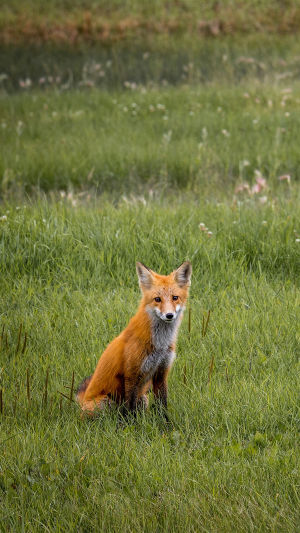
A flash of fiery orange darts across a snowy field, pausing to tilt its head and listen intently.
The red fox is elusive yet familiar, captivating observers with its agility, intelligence, and adaptability.
From urban edges to deep forests, this small predator demonstrates remarkable survival skills, thriving in environments that challenge other wildlife. Understanding the red fox's behavior, habitat, and ecological role offers insight into one of nature's most versatile mammals.
<h3>Distinctive Features and Adaptations</h3>
<b>Striking appearance</b>
Red foxes are known for their vibrant reddish-orange coat, bushy tail tipped with white, and sharp, triangular ears. This coloring provides both camouflage and visual communication within their species. Seasonal coat changes, denser in winter, help maintain warmth in cold climates while blending into the surroundings.
<b>Sharp senses</b>
Foxes rely on acute hearing, sight, and smell for hunting and avoiding danger. They can detect small rodents under snow or leaves from several meters away. Their ability to pinpoint sounds with precision is essential for locating hidden prey, particularly in low-light conditions during dawn or dusk.
<b>Adaptable physiology</b>
Lightweight yet muscular, foxes can leap over one meter in a single bound and run at speeds up to 50 km/h. Their agile bodies allow them to navigate uneven terrain, climb small obstacles, and enter burrows or dens to evade predators or harsh weather.
<h3>Habitat and Distribution</h3>
<b>Diverse environments</b>
Red foxes occupy forests, grasslands, mountains, deserts, and even suburban areas. Their flexibility in choosing habitats is key to their success across much of the Northern Hemisphere, from Europe and Asia to North America.
<b>Den selection</b>
Foxes prefer dens or burrows for shelter and raising young. These may be dug by themselves or inherited from other animals. Dens provide safety from predators and harsh weather while offering a secure location for kits during their first months.
<b>Urban adaptation</b>
In cities and towns, foxes exploit human resources, scavenging for food in gardens, parks, or waste bins. They are mostly nocturnal in urban areas to avoid human interaction, demonstrating behavioral flexibility that supports survival in close proximity to people.
<h3>Diet and Hunting Techniques</h3>
<b>Omnivorous diet</b>
Red foxes primarily hunt small mammals, birds, insects, and amphibians. They also consume fruits, berries, and human food when available. This varied diet allows them to survive in ecosystems with fluctuating prey availability.
<b>Pouncing and caching</b>
A signature hunting method involves listening intently, then leaping high to pounce on hidden prey beneath snow or vegetation. Foxes often store surplus food in caches, burying it to retrieve later, ensuring a steady supply during lean periods.
<b>Individual hunting strategies</b>
Each fox develops personal techniques based on terrain and prey behavior. Some rely on stealth, while others use rapid pursuit. These learned strategies demonstrate intelligence and adaptability in responding to environmental challenges.
<h3>Conservation and Human Interaction</h3>
<b>Population status</b>
Red foxes are currently widespread and not considered endangered, thanks to their adaptability and high reproductive rates. A litter of up to six kits per year helps maintain stable populations in most regions.
<b>Challenges from humans</b>
Despite resilience, foxes face habitat loss, road accidents, and sometimes hunting or poisoning. Urban expansion can fragment territories, making food access and safe movement more difficult.
<b>Conservation and coexistence</b>
Education about fox behavior helps communities coexist peacefully with urban foxes. Protecting natural habitats, avoiding unnecessary culling, and understanding their ecological role as predators that control rodent populations contribute to healthy ecosystems.
Observing a red fox in its natural environment reveals a creature of agility, cunning, and remarkable resilience. Their striking appearance, versatile diet, and adaptability allow them to navigate both wilderness and human-altered landscapes.
By appreciating the red fox's intelligence and ecological significance, people can foster coexistence and ensure that these agile mammals continue to thrive, whether in dense forests, open fields, or the edges of our cities.


