

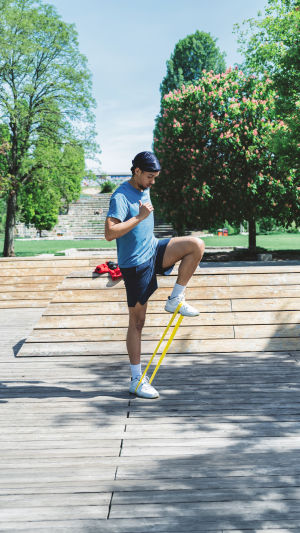
Finding an effective way to stay active at home doesn’t have to be complicated. Imagine using just one lightweight, stretchy band to train our entire body—no gym, no bulky machines, no excuses.
A simple resistance band can awaken every major muscle group, build strength, and tone our body efficiently.
Whether we’re new to fitness or already experienced, this small tool brings professional-level results straight into our living room.
<h3>Understanding the Basics: Resistance Bands 101</h3>
Before we jump into the workout, it’s important to understand what kind of resistance band suits us best. There are two main types: loop bands and long bands. Loop bands are great for lower-body exercises like squats and hip work, while long bands are perfect for upper-body training, such as rows and presses.
We can choose the resistance level based on our fitness goals:
- Light resistance for beginners or recovery training
- Medium resistance for general fitness
- Heavy resistance for strength or advanced workouts
When training, we should always control our movements, engage our core, and increase resistance gradually to build strength safely and effectively.
<h3>Safety First: Warm Up and Protect Your Joints</h3>
Before we start, we should always warm up—simple moves like brisk walking, shoulder rolls, or gentle squats can get our blood flowing. During training, we need to keep our knees and elbows slightly bent to prevent joint strain. After each session, stretching our muscles helps relieve tension and supports faster recovery. These small steps make a big difference in keeping us injury-free.
<h3>Full-Body Resistance Band Moves to Try at Home</h3>
Here are ten effective exercises to strengthen our whole body:
- Band Squats (Legs, Glutes, Core) – Step on the band, hold both ends, and squat down with your knees aligned with your toes. Stand back up slowly, engaging your glutes.
- Band Deadlifts (Hamstrings, Glutes, Lower Back) – Keep your back straight and hinge at the hips while holding the band. Feel your legs and glutes working as you rise.
- Single-Leg Deadlifts (Balance & Stability) – Great for improving balance. Stand on one leg, extend the other back, and keep your core tight.
- Band Push-Ups (Chest, Triceps, Shoulders) – Wrap the band around your upper back for added resistance as you push up from the floor.
- Chest Fly (Chest, Shoulders) – Anchor the band at chest height, stretch your arms outward, then bring them back together slowly.
- Seated Rows (Back, Arms) – Sit and pull the band toward you while keeping your torso steady and your back straight.
- Bent-Over Rows (Mid-Back, Rear Shoulders) – Lean forward, pull your elbows back, and focus on your shoulder blades.
- Lateral Raises (Shoulders) – Step on the band and lift both arms sideways to shoulder height.
- Face Pulls (Rear Shoulders) – Anchor the band at face level and pull it toward your face while keeping elbows high.
- Band Sprints (Explosive Power) – Fix the band around your waist, lean forward slightly, and perform short sprints to build leg power.
Every move targets key muscle groups, improving strength, coordination, and stability.
<h3>Weekly Training Plan</h3>
For beginners, start with this 30-minute routine three times a week:
- Squats: 3 sets × 12 reps
- Push-Ups: 3 sets × 10 reps
- Rows: 3 sets × 12 reps
- Lateral Raises: 3 sets × 12 reps
- Band Sprints: 3 sets × 30 seconds
For a more advanced level, train four times a week, 45 minutes each:
- Deadlifts: 4 sets × 10 reps
- Single-Leg Deadlifts: 3 sets × 8 reps per leg
- Chest Fly: 3 sets × 12 reps
- Bent-Over Rows: 4 sets × 10 reps
- Band Sprints: 4 sets × 15 seconds
This gradual progression helps our body adapt and keeps the training challenging and fun.
<h3>Common Questions, Answered</h3>
<b>Can resistance bands really build muscle?</b>
Yes! By maintaining slow, controlled movements and constant muscle tension, we can stimulate growth just like traditional weights.
<b>How do we choose the right resistance level?</b>
Start light and move up once we can easily perform 15 reps. The goal is to feel challenged, not strained.
<b>What’s the difference between band training and dumbbells?</b>
Bands offer variable resistance and portability—ideal for home use. Dumbbells provide stable weight, perfect for heavier strength training. Combining both gives the best of both worlds.
<b>How do we avoid mistakes during training?</b>
Stay focused, follow correct form, and progress slowly. Watching tutorial videos or checking your posture in a mirror helps ensure safety and effectiveness.
<h3>Keep Growing Strong</h3>
Lykkers, a resistance band may look simple, but it can completely change how we train and feel. With regular practice, we can build strength, enhance stability, and gain confidence in our body’s natural power. This small tool is the key to unlocking greater energy, focus, and overall wellness right from home.
Let’s grab our band, turn on some music, and start moving with intention. Every stretch and pull helps us grow stronger, steadier, and more alive. Together, Lykkers, we’re shaping a healthier future—one mindful move at a time!


