

Brazil's federal government has created a vast marine and coastal conservation area to protect one of the country's most critical biodiversity hotspots.
The Albardão Marine Park and its adjacent coastal protected zone span over 1 million hectares (2.5 million acres), making it Brazil's largest marine park and the third-largest marine protected area in the country.
An additional buffer zone of 614,000 hectares (1.5 million acres) further safeguards the region.
The Albardão region brings together ecosystems that are fundamental to Brazil's biodiversity. The site is considered strategic for the life cycle of several threatened species.
<h3>Endangered Species Thrive</h3>
The newly protected area is home to a remarkable array of wildlife, including critically endangered marine mammals and unique megafauna fossils.
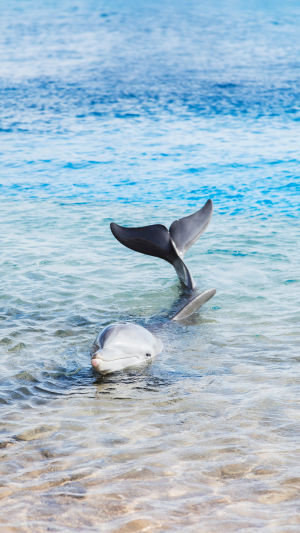
<b>1. Dolphins</b> – Lahille's bottlenose dolphins (Tursiops truncatus gephyreus), with only around 500 individuals remaining, and franciscana dolphins (Pontoporia blainvillei) inhabit the waters.
<b>2. Sharks and Rays</b> – At least 23 species of threatened sharks and rays, including angel sharks and the bowmouth guitarfish (Rhina ancylostomus), are found in the park.
<b>3. Fossil Discoveries</b> – In the coastal area of nearly 56,000 hectares (138,000 acres), paleontologists have uncovered Pleistocene megafauna such as ground sloths, saber-toothed cats, giant armadillos, and mastodons.
Sustainable ecotourism, artisanal fishing, and scientific research are allowed in designated areas, ensuring both protection and responsible human activity.
<h3>Balancing Conservation and Development</h3>
While widely celebrated by conservationists, the park's creation has drawn controversy at the state level. Rio Grande do Sul had plans for offshore wind power generation as part of its energy transition strategy.
<b>1. State Concerns</b> – Officials worried that the new park would limit renewable energy projects, particularly wind farms.
<b>2. Government Response</b> – The federal government partially addressed concerns by permitting infrastructure corridors for connecting offshore energy projects to the mainland, provided environmental goals are maintained.
<b>3. Shipping and Navigation</b> – Maritime traffic is allowed throughout the protected zone, balancing human activity with ecological preservation.
<h3>A Reflection on Protection</h3>
The Albardão Marine Park highlights Brazil's commitment to safeguarding both living species and the remnants of its ancient past. Protecting endangered dolphins, rare sharks, and megafauna fossils reminds us that conservation is not just about the present—it is about preserving a legacy for future generations. In a world of competing interests, careful stewardship ensures that biodiversity and history remain intertwined and resilient.


